
The world's largest collection of historic British cars


The world's largest collection of historic British cars
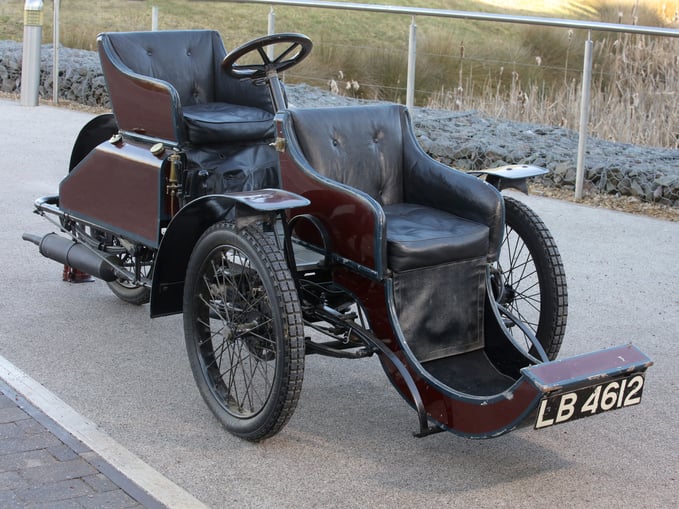
Tricars were a cheap and popular form of transport that were an alternative to the four-wheeled vehicles that were on offer at the turn of the twentieth century.
Developed after initial experiments that adapted existing pedal cycle designs to motorised tricycles (an 1899 example is in the Museum’s collection), Riley produced its first tricar in 1904.
The fashion for these three-wheeled vehicles only lasted for a few years as the development of four-wheeled motor cars gained momentum, but in their heyday they represented popular motoring at its best. Riley’s successful production of tricars and motorcycles stopped in 1907 to focus on four-wheeled vehicles.
This tricar was designed by Stanley Riley, one of five talented brothers who developed the family business. It had a forecar arrangement to be able to carry a passenger at the front, wheel steering rather than handlebars and a proper seat for the driver.
With many awards taken in reliability runs, hill climbs, and other trials, the tricars laid a modest foundation for Riley’s sporting achievements in later years.














.png)