
The world's largest collection of historic British cars


The world's largest collection of historic British cars
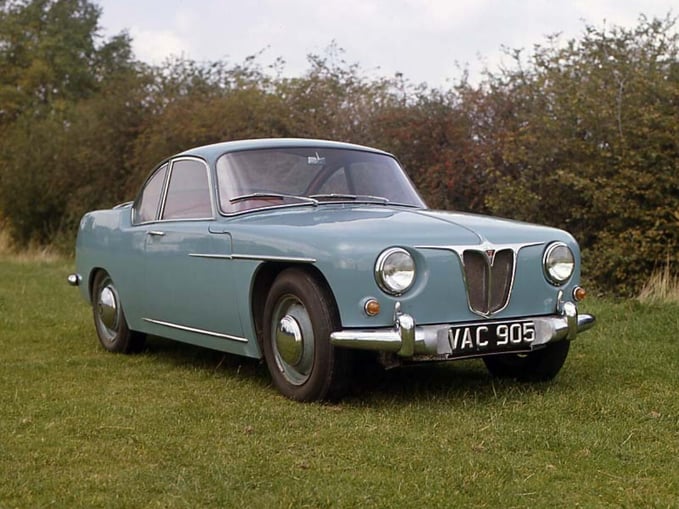
Rover’s third gas turbine car, T3, was part of a programme that stemmed from the company’s government-backed work with Frank Whittle’s jet engines during the Second World War.
Although Rover was supposed to assist Whittle with gas turbine engine development, they also altered his original designs which infuriated Whittle. Despite the relationship breakdown, Rover made their first gas turbine engine for a car in 1950 called JET 1.
Rover’s work continued and T3, designed by Spen King and Gordon Bashford, was the first to be specifically planned around the gas turbine. It was an incredibly forward-thinking prototype with a modified rear-mounted modified 2S/100 gas turbine rotating at 52,000 rpm, four-wheel-drive and De Dion rear suspension within a sleek glass-fibre coupe body. Many of these ideas found a place in the Rover 2000 range of saloon cars, including four-wheel disc brakes and all coil spring suspension.
Although T3 was a perfectly useable road car, the paraffin consumption was unacceptably high. With fuel economy of just 13-14 miles to the gallon, it was not a practical production car. Even today, the problems of fuel economy still exist for small-scale application, limiting gas turbine options for everyday cars.















.png)